
Welcome! I’m so glad you are here.If you ever wondered how you can have more control over what you eat so you know exactly what is in your food, then you’re in the right place. This is the start of a journey- not only for you, but for me as well. This blog is my commitment to exploring the world of food preservation, and I’m inviting you to join me as I learn.
Why Food Preservation, and Why Now?
Well in a world of convenience and year-round availability, why should we bother with the old-fashioned practice of preserving food? The reasons are more relevant today than ever before. Let’s look at some of those benefits:
- Health and Nutrition: When you preserve your own food, you control the ingredients. No hidden sugars, no unpronounceable preservatives, just wholesome food. Furthermore, produce canned promptly after harvest can be more nutritious than store-bought produce, which can lose half its vitamins within days of being picked.
- Financial Savings: Buying produce in bulk during its peak or growing your own can significantly reduce your grocery bills.
- Food Security: A well-stocked pantry provides a critical buffer against supply chain disruptions, financial hardship or even the convenience of avoiding a store trip during a busy week.
- Deeper Connection: This act connect us to the seasons, the land and to traditional skills for nurturing our bodies.

The Science of Spoilage and Safety
To preserve food safely, we must understand why it spoils. Spoilage is caused by enzymes ( natural proteins that break down food) and microorganisms like bacteria, molds and yeasts. Preservation works by manipulating PH levels, moisture and temperature to slow or stop these processes.
Safety is the top priority: the FDA/CDC reports that approximately 48 million people (1 in 6) in the U.S. get sick from foodborne diseases each year, leading to 3.000 deaths. Following research-based methods is the only way to prevent risks like botulism, a deadly form of food poisoning that can grow in improperly canned, low-acid environments.
The Four Pillars of Preservation
There are many methods to explore when it comes to Food Preservation, but to start this journey, we are going to explore the four main methods. Each as its own unique benefits and its suited for different types of food. Think of these as the four pillars of your future pantry.

1.Canning (Water Bath & Pressure Canning)
This is the method that first comes to mind for most of us- jars filled with jams, pickles and vegetables. Canning uses heat to destroy microorganisms and create vacuum seal, making food shelf-stable for years. The method you choose is determined by the pH (acidity) of the food and there are two main processes under this flag:
- Water Bath Canning: Used for high-acid foods (pH of4.6 or lower), such as most fruits, jams, jellies and pickles. Jars are submerged in boiling water (212°F / 100°C) to kill off mold, yeast and some bacteria.
- Pressure Canning: This is the only safe method for low-acid foods (pH higher than 4.6), including vegetables, meats, poultry and soups. Pressure allows the canner to reach 240-250°F (115- 121°C), which is necessary to destroy botulism spores.
CRITICAL SAFETY WARNING: Never use an Instant Pot or similar electric pressure cooker for pressure canning low-acid foods. Testing shows these appliances do not maintain the consistent high temperatures required by the USDA to kill harmful bacteria.
Dehydrating
Dehydrating is one of the oldest and simplest methods of food preservation. It works by removing moisture from food, which inhibits the growth of bacteria, yeast and mold.
Dehydrated foods are lightweight and compact, making them a ‘preparedness must’ for long-term storage and travel. This is an incredibly versatile method – you can dehydrate almost everything including fruits, vegetables and herbs. To prolong shelf life, store dried food in a cool, dark and dry area.
Freezing
Freezing is probably the most accessible preservation method for modern kitchens. It’s excellent for retaining the fresh flavor and nutritional value of many foods.
- The Secret to Success – Blanching: For the best quality, you should blanch most vegetables before freezing. This involves briefly heating them in boiling water or steam to stop enzyme activity, which otherwise causes a loss of flavor, color and vitamins.
- Vacuum Sealing: Using a vacuum sealer can extend the life of your food by up to five times longer than traditional methods. By removing oxygen, you inhibit aerobic bacteria and prevent freezer burn.
Fermenting
Fermentation is a transformative process that uses beneficial microorganisms to preserve food. Unlike other methods, fermentation actually enhances the nutritional value and creates complex, tangy flavors. It is the magic behind gut-health favorites like sauerkraut, kimchi, yogurt and sourdough bread.
- How it works: For most vegetables, you simply mix them with a saltwater brine and let them sit at room temperature.
- Pro-Tip: Food ferments in an anaerobic (oxygen-free) environment. It is critical to keep your vegetables submerged below the brine; any food exposed to air will quickly grow mold and ruin the entire batch.

In the next post we are going to take a look at the most common mistakes when applying the Canning Method and how to avoid them. I’ll see you there.
Frequently Asked Question
1. What are the oldest food preservation methods?
Dehydrating and fermenting are among the oldest preservation techniques, dating back thousands of years. Both methods require no electricity and sustained civilizations long before modern refrigeration existed.
2. What is the most commonly used method of food preservation today?
Freezing is the most widely used preservation method due to its convenience and ability to retain fresh flavors and nutrientes. However, home canning hs seen a major resurgence in recent years as people seek greater control over ingredients and food security.
3.Which preservation method is best?
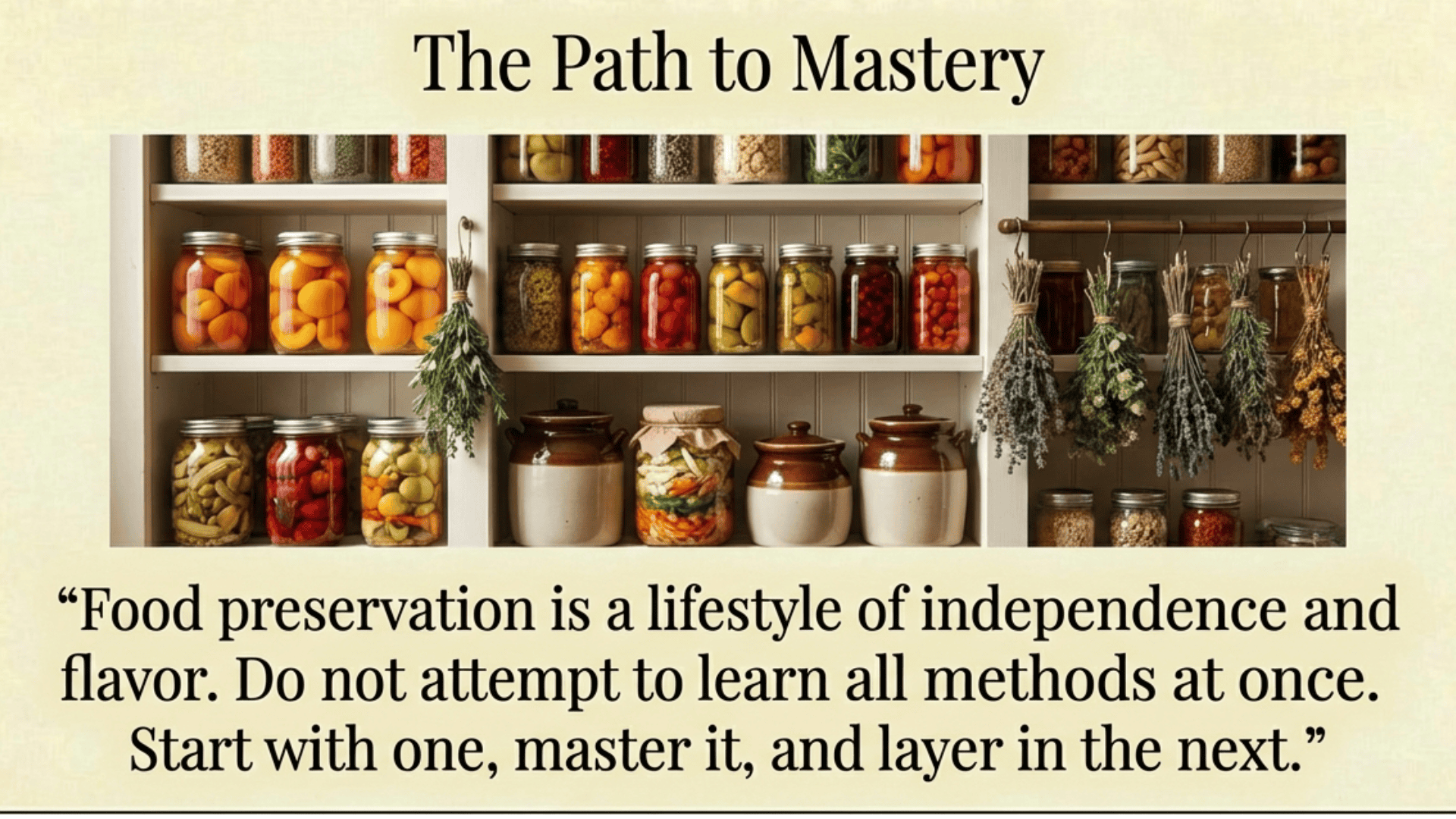
The best method depends on the type of food and your goals. Start with one method, master it, then layer in others as you gain confidence – there’s no single ‘best’ method, only the right method for each food.
Hi, this is a comment.
To get started with moderating, editing, and deleting comments, please visit the Comments screen in the dashboard.
Commenter avatars come from Gravatar.